Like most public school students, I had grown familiar with having to ask for a seemingly inherent aspect of autonomy, a request often met with rejection of a basic human need.
For most of my life I have been perceived as a mere extension of the adult whose shadow I walked in, a person who couldn’t begin to understand the complexities of my own life or the world around me. From my academic performance solely defining my success to painfully holding my ground as a Tennessee high school student, my identity was only partially seen and heard. Even then, it was rarely truly considered. But being in the margins is not just a personal identity. It is a political reality. It shapes how institutions treat us, how policies are written, and how power is distributed.
adultism, n.One of the few forms of prejudice that still moves through the world largely unquestioned. It grants automatic credibility to one party and presumed unreliability to the other.
I understood this as the norm, the automatic imbalance of power between generations making sense for what ‘little’ wisdom I had. The implicit biases I carried toward my own identity remained until I began organizing in authentic, intergenerational partnerships that moved intentionally and equitably. For the first time, I felt holistically seen as a person. Organizing became my way of reclaiming power and reframing the narrative that had always defined me from the outside in. By challenging systems and inherent attitudes that perpetuate injustice intergenerationally, we can foster environments that prioritize the voices and insight of young people.
Rev. Jennifer Bailey founded the Faith Matters Network.Reverend Jennifer Bailey famously says, “Social change happens at the speed of relationships, and relationships move at the speed of trust.” As an adult now, I know that I don’t want to recreate relationships with youth that mirror the dynamics I was once trapped in. We must embody what we aim to create, or the changes we make will reproduce the very harm we’re trying to undo.
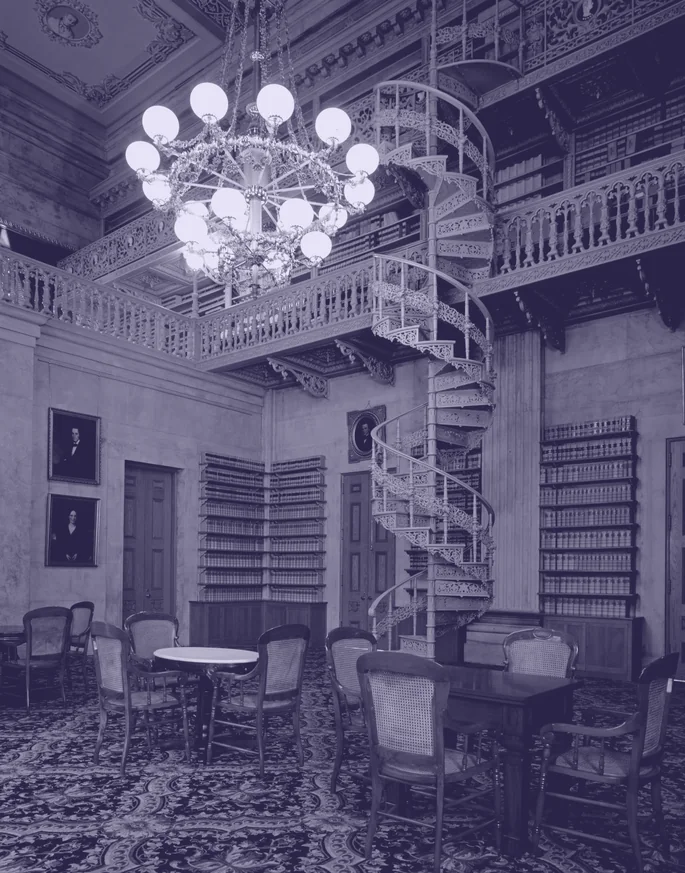
This narrative that equates age with knowledge bleeds into influential systems all around us. My community organizing path eventually led me to the Tennessee State Capitol. I had the opportunity to testify against a bill that opened the door for marginalized students’ identities, my identity, to be openly rejected in educational spaces where youth are meant to feel safe, seen, and supported as they grow into their most authentic selves.
To testify was not just to speak. It was to fight for my right to exist without compromise.
I thought I finally had a chance to have my voice heard, my hurt represented in the ‘House of the People’ that so proudly claimed humanism. Yet my voice was drowned out by adults who felt a false need to speak for youth who have voices themselves.

Adults seem to dictate every choice that directly impacts youth, excluding us from decision-making by design. The contents of my education, my interaction with law and justice, my comfort in school, my financial and medical autonomy, and more are all traditionally determined by those who are not nearly as impacted by the decisions at hand. Youth are not a monolith, and neither is oppression. Both must be addressed through the lens of intersectionality.
Dr. Stacey Patton writes on child advocacy. Cited by the author as Patton, 2020.Dr. Stacey Patton explains that adultism is “the fertile soil in which racism, sexism, violence, and other forms of oppression grow and get reproduced for generations” (Patton, 2020). Dismantling adultism is imperative to the fight against all forms of oppression and harmful generational cycles. When adultism is left unchecked, it becomes a gateway through which other systems of power gain legitimacy.
We see it everywhere. Schools have become political battlegrounds where young people’s learning is being treated like ideological terrain. Their crises are moralized instead of addressed, and their behavior is criminalized instead of understood. Youth are met with control instead of community.
And the narrative isn’t getting any better. These narratives are not just false; they are political tools used to justify exclusion and punishment. Youth, particularly those who belong to other marginalized groups, are being blamed, profiled, and generalized to fit a false narrative that they are the problem. We cannot get to the root causes of such issues if we don’t value youth as human beings and masters of their own lived experience.
To dismantle adultism is to dismantle the training ground of oppression. See youth as people first.
and recognize
their stories are more than anecdotes. they are acts of resistance.
Milana Kumar · read her story
Picture credits
- Tennessee State Capitol, 2021, and the former Tennessee State Library: Carol M. Highsmith, photographer. Carol M. Highsmith Archive, Library of Congress, no known restrictions on publication. Shown here in duotone.