Skip to content
Get in touch
02

Slowly, and carefully

2020 to 2025: the years we spent learning instead of launching.

Through COVID, we tried to answer that question with a debate platform. We saw debates everywhere and believed there was a better way to host them. We were not the first to think so. TruStory, a debate platform backed by $3 million in venture funding, launched around the same time and shut down in early 2020. They moved fast and spent big. We moved slowly and learned carefully.

Wen Zhang

What Pulp learned, and what TruStory's experience confirmed, was that a consumer platform was not the right path at the time. People debate all the time. But how do you score a debate? What cannot be measured cannot be improved. The work had to go deeper, into the research, toward a system that could analyze the forces that persuade people.
2020

Three forks in a pandemic

  1. Ed-tech or no ed-tech?
  2. Text, or audio and video?
  3. Politics?

Every conversation moved online at once, and every question got harder. In time each fork resolved the same way. Pulp kept its teaching instinct without becoming an ed-tech company, built for text, audio and video alike, and chose public life, the arena where persuasion matters most, as its first market.

Who arrived: Jeff Harris and Hannah Peyton, who knew the rooms where persuasion decides things from the inside.

2021

The pitch that would not write itself

  1. Losing his mind over an elevator pitch that would not write itself
  2. Learning the difference between an idea and a product, at Capicua
  3. Understanding financial forecasting, for real

Pulp could be explained in an hour and not in thirty seconds, which usually means an idea is not yet a product. The first MVP was not good enough. Wen stepped away to work as a data scientist and study mental health. Shah learned product from Ismael Larrosa's studio, Capicua, and became Chief Information Officer at Melabel, working on complex information and automation with its founder and CEO, Rousseau (Nafiz) Mannan. His note from that time: everything done for Pulp was done there on a smaller scale.

Who arrived: Pat Arcadipane, who made forecasting a set of promises instead of a slide, and Ismael Larrosa.

2022

Capital, experience, and AI

  1. Capital?
  2. What makes an experience? Entrepreneur in residence at Capicua
  3. What has AI got to do with this? Entrepreneur in residence at Cobalt

At Cobalt Speech and Language in Boston, Shah worked inside a speech and language AI company, mentored by Jeff Adams, one of the people who built Amazon's Alexa, alongside Cobalt's CEO, Scott Earnshaw. Late that year the rest of the world met AI that writes. Words got cheap overnight, and the old question got sharper.

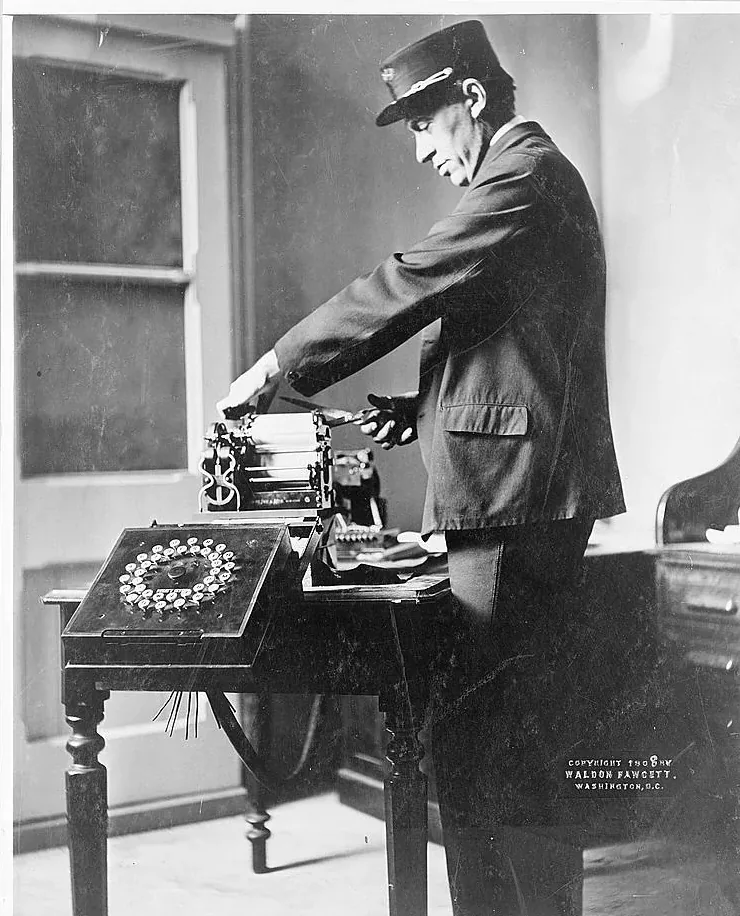
A man in a cap operates a printing telegraph machine on a small table.
1908A printing telegraph. Every generation gets a new channel for words, and the same question about what they do.Library of Congress, no known restrictions on publication.

Who arrived: Jeff Adams and Scott Earnshaw.

2023

What do words generate?

  1. Apprenticeship, part one: the beginning
  2. What is the role of persuasion in knowledge transfer?
  3. If AI generates words, and AI is so valuable, what do words generate that is so valuable?

The answer was confidence. A sentence matters because of what it does to the person who receives it. That idea became Persuasive Resonance, and structured research on persuasive dynamics began. So did the apprenticeship. Damani Thomas was the first apprentice; he now leads research engineering.

Who arrived: Robin and Damani Thomas.

2024

Learning to manage by teaching

  1. More research: markets, metadata and modeling
  2. Learn management by teaching management? It works better than it sounds.
  3. Apprenticeship, part two: Persuasive Force, Persuasive Resonance, and objective based scoring

When every new apprentice has to understand why a method works before using it, you find out fast which methods you actually understand. Every score became a measurement against a stated goal, because a score with no goal behind it is only an opinion.

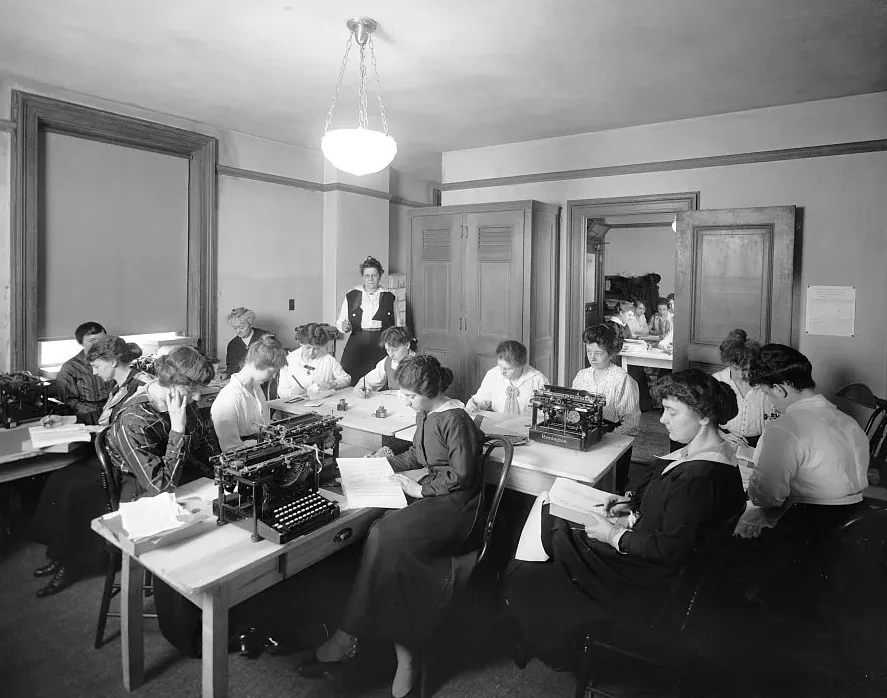
A room of women working at typewriters on long tables.
1910An office in Washington, around 1910. Most skills are learned by doing them beside someone who already can.Library of Congress, no known restrictions on publication.

Who arrived: Uday Turakhia, who went on to build the engine behind the Pulp API.

2025

An API, a product, and a return

  1. Packaging the Pulp API
  2. Introducing Thinkwell
  3. Apprenticeship, part three: the attention economy

Seventeen researchers from fourteen campuses asked what happens when attention becomes a currency. Ten working papers came out of it. And Wen came back.

In 2025, after five years working as a data scientist and finishing a second master's degree in mental health, I came back to see what Shah had been building. I was struck by the quality of the work and the talent he had gathered, and I decided to take an active role in Pulp.

Wen Zhang
A figure in silhouette looks out over a city glowing at night.
Late nights, long horizons.Photo: Jean Carcallas

Picture credits

Pulp

Color mode

Roll into a random page on Pulp. A few hidden pieces can only be accessed by taking a chance.

Get in touch

Color mode

Kept on this device only.

What are you trying to understand?

So we know who to write to.
An address we can reply to, like name@example.com.
A question, a dataset, an argument that keeps going in circles.

Get in touch
Roll into a random page on Pulp. A few hidden pieces can only be accessed by taking a chance.